

Licensing is a critical milestone for any behavioral health startup or program expansion, but it is often more complicated than founders expect. Each state has its own rules, forms, timelines, terminology, and expectations. Some states require detailed program narratives, staffing plans, physical plant review, policies and procedures, proof of ownership, financial information, background checks, inspection coordination, or evidence of accreditation readiness. Local zoning, fire, building, and occupancy requirements may also affect the process.
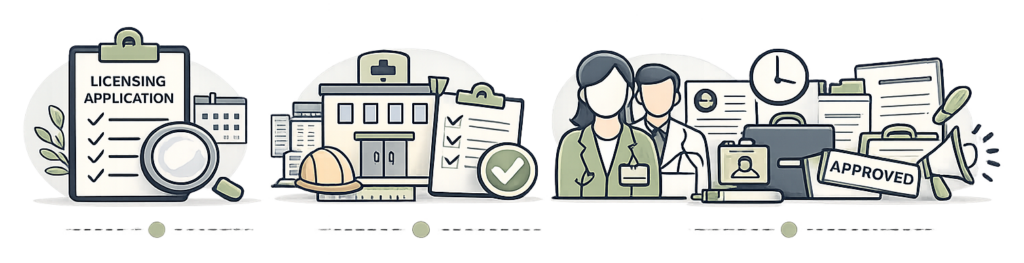
One of the most common licensing mistakes is beginning the application before the operating model is fully defined. A licensing body may ask questions about level of care, staffing, hours of operation, population served, medication practices, clinical services, supervision, emergency procedures, and client rights. If the organization has not made clear operational decisions, the application can become inconsistent or incomplete.
Facility selection can also create licensing problems. A building may seem appropriate from a business perspective but fail to meet regulatory expectations, zoning limits, accessibility requirements, safety needs, or client flow considerations. Once a lease is signed, correcting these issues can be expensive. Early review of facility fit is essential.
Policies and procedures are another major part of licensing readiness. Generic policies are rarely enough. Policies should reflect the actual services, staffing model, client population, level of care, state requirements, and accreditation expectations of the organization. If policies are copied from another program without customization, they may create obligations the organization cannot meet or fail to address required areas.
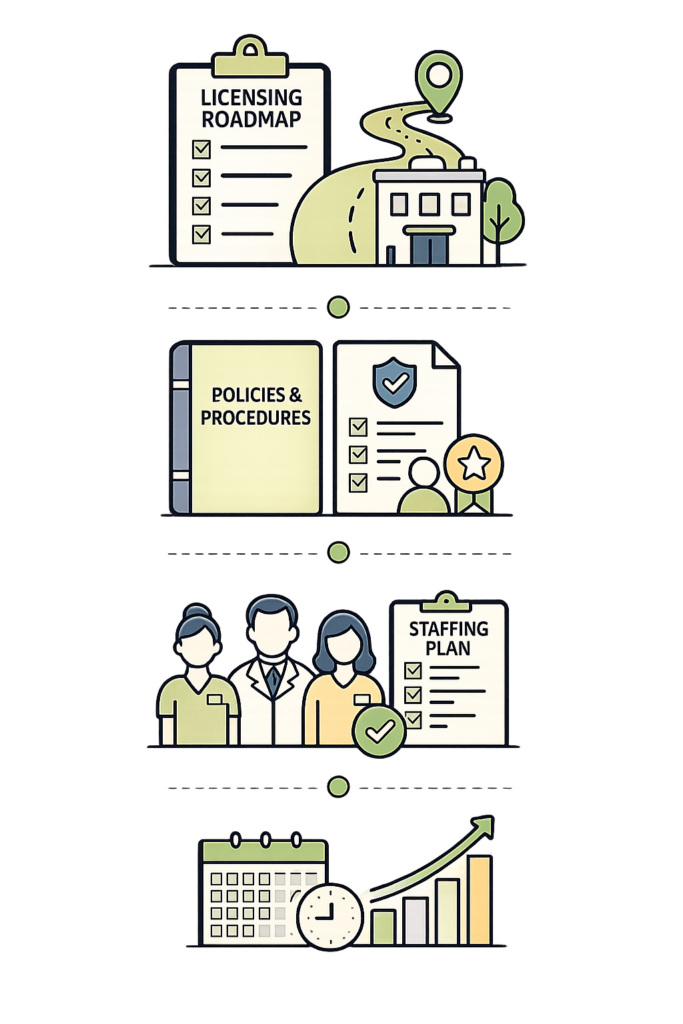
Staffing plans must also align with licensing rules and operational reality. State requirements may define clinical supervision, medical oversight, counselor credentials, training, background checks, or staff-to-client expectations. At the same time, the organization must build a staffing model that is financially sustainable. Licensing readiness and financial planning need to be connected.
Licensing delays can be costly. A delayed approval may postpone admissions, payer enrollment, accreditation progress, marketing launch, and revenue generation. Meanwhile, the organization may still be paying rent, payroll, legal fees, consulting fees, insurance, software, and other startup expenses. For many founders, reducing avoidable delays is one of the most valuable parts of working with an experienced consultant.
Kindel Consulting helps organizations navigate licensing by creating a clear roadmap. Services may include application planning, policy review, facility readiness support, staffing model development, compliance infrastructure, accreditation alignment, pre-survey preparation, and operational launch planning. The work is tailored to the state, level of care, and goals of the organization.
Licensing should not be viewed as a paperwork hurdle. It is the first test of whether the organization’s model is coherent, compliant, and ready to operate. A strong licensing strategy helps build the foundation for accreditation, payer contracting, quality care, and long-term growth.
Kindel Consulting supports behavioral health providers through this process with practical guidance designed to reduce confusion, improve readiness, and move projects forward.