

Compliance in behavioral health is not a single department or a once-a-year review. It is the way an organization proves that it is operating safely, ethically, and consistently. Every policy, training record, incident report, clinical note, personnel file, committee meeting, and corrective action plan contributes to the larger compliance picture.
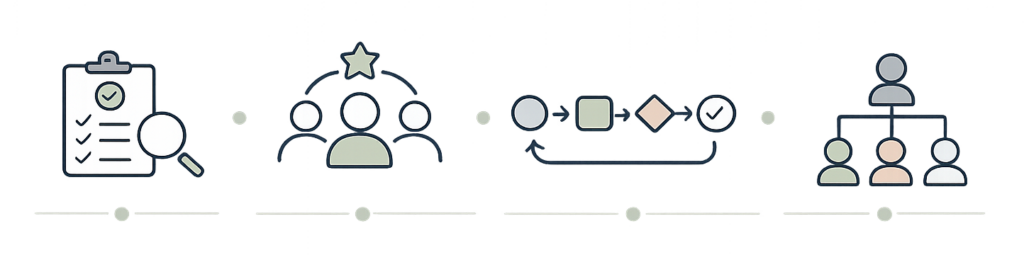
Many organizations struggle because compliance expectations are spread across multiple sources. State licensing requirements may say one thing, accreditation standards may add another layer, payers may have their own expectations, and internal policies may create additional obligations. When these requirements are not organized into a practical system, leaders can feel overwhelmed and staff may be unclear about what is expected.
A common compliance issue is the gap between written policy and actual practice. Organizations may have policies that look appropriate on paper but are not being followed consistently. Surveyors, auditors, and payers often focus on this distinction. If documentation, staff interviews, or daily workflows do not align with policy, the organization may face findings even when the policy itself is well written.
Personnel files are another frequent vulnerability. Missing background checks, expired credentials, incomplete orientation records, lack of competency documentation, and inconsistent training logs can create risk quickly. These issues are especially common in organizations that have grown quickly, experienced turnover, or relied on manual tracking systems.
 Quality improvement and performance improvement activities are also often underdeveloped. Many organizations collect data but do not clearly show how the data is reviewed, what actions were taken, whether improvements were sustained, and how leadership uses information to guide decisions. A compliance system should demonstrate active oversight, not just data collection.
Incident reporting and corrective action planning require similar discipline. Organizations need clear processes for identifying incidents, reviewing trends, documenting follow-up, implementing corrective actions, and communicating lessons learned when appropriate. Weak incident review can create risk for clients, staff, leadership, and the organization as a whole.
Kindel Consulting helps organizations build compliance systems that are practical and sustainable. The work may include policy review, compliance gap assessments, personnel file audits, staff training review, corrective action planning, quality improvement structure, audit preparation, and leadership coaching. The goal is to create a system that supports daily operations rather than overwhelming them.
Strong compliance systems also improve organizational confidence. Leaders can make better decisions when they understand the organization’s risks. Staff can perform better when expectations are clear. Payers and referral partners are more likely to trust organizations that demonstrate consistency and accountability.
Many organizations are also moving away from spreadsheets and disconnected tracking systems toward centralized compliance management platforms. Solutions such as Simplifyance and Kipu Compliance (formerly Hatch Compliance) provide behavioral health organizations with a single location to organize policies and procedures, assign recurring compliance tasks, monitor staff training, track corrective action plans, document Environment of Care activities, manage incident reporting, oversee credentialing, and maintain survey readiness. While technology alone does not create compliance, a well-designed compliance management system can improve visibility, increase accountability, and help leadership identify potential risks before they become regulatory findings. Kindel Consulting helps organizations evaluate, implement, optimize, and integrate these platforms into daily operations so they become practical management tools rather than just another piece of software.
For behavioral health providers, compliance should not be viewed as a separate administrative burden. When done well, it supports safety, quality, financial stability, and long-term growth. Kindel Consulting helps organizations move from reactive compliance to proactive operational readiness.